

New Delhi | July 18, 2026
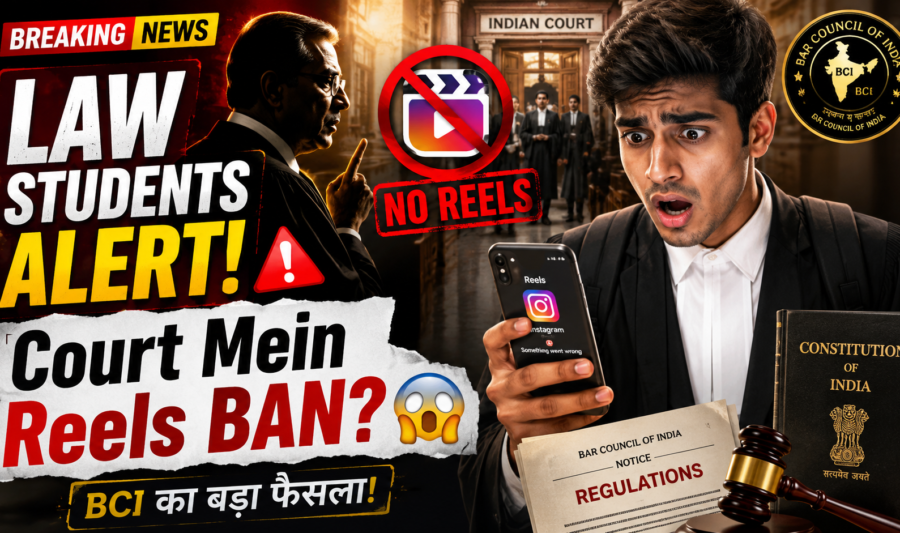
If you’re a law student who loves documenting every part of your internship for Instagram or YouTube, the rules have just changed.
The Bar Council of India (BCI) has issued a fresh directive requiring every law student to sign an undertaking before admission and again before each internship, promising to follow strict social media and digital ethics guidelines.
In simple terms, the BCI wants students to keep courtrooms, chambers, and client work off social media.
What’s Being Banned?
The council has specifically warned students against posting content such as:
- “Day in Court” vlogs
- “Internship Reveal” videos
- “Lawyer Life” reels
- Court corridor selfies and videos
- Chamber discussions
- Client meetings
- Courtroom recordings
- Virtual hearing clips
- AI-generated or edited content showing judges, courts, or litigants
According to the BCI, internships are meant to teach professionalism, discipline, legal research, and courtroom ethics—not to create viral content.
Why Is the BCI Doing This?
The regulator says there’s been a growing trend of students turning court visits and internships into social media content.
While these videos may seem harmless, the BCI believes they risk exposing confidential information, compromising client privacy, and reducing serious legal work to entertainment.
The message is clear: learning law should come before building an online brand.
Colleges Have New Responsibilities Too
The new circular doesn’t just target students.
Law colleges have been instructed to:
- Conduct mandatory orientation sessions on digital ethics.
- Explain social media rules before every internship.
- Collect signed undertakings from students.
- Appoint a nodal officer to monitor compliance.
- Maintain records of student declarations and training programmes.
Simply uploading the circular on a college website or WhatsApp group will not count as compliance.
Not About Moral Policing
The BCI has also clarified that these rules shouldn’t be misused to target students unfairly or suppress genuine criticism.
Instead, institutions are encouraged to educate students first, especially if violations happen because of inexperience or excitement.
However, repeated or deliberate breaches—particularly those involving confidential information, court rules, defamation, or commercial content—could be reported to the relevant court, institution, or Bar Council.
The Bigger Picture
As social media increasingly becomes part of student life, the BCI is drawing a clear line between sharing personal experiences and protecting the dignity and confidentiality of the legal profession.