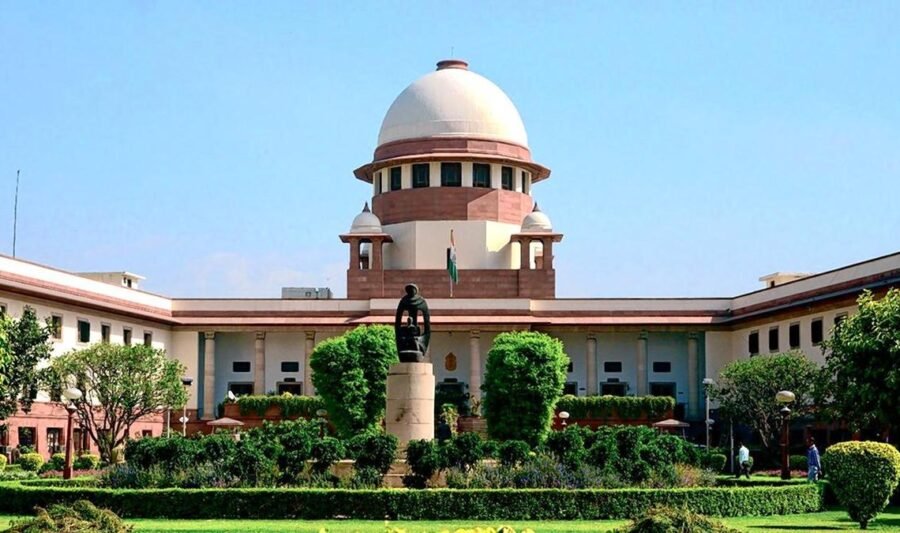
Supreme Court Questions Hospital Response in Ghaziabad Child Rape and Murder Case
In a deeply disturbing case that has shocked the nation, the Supreme Court of India has strongly criticized two private hospitals in Ghaziabad for allegedly refusing emergency treatment to a four-year-old girl who was later declared dead.
The case has reignited concerns about emergency medical care, accountability in private healthcare, and the treatment of economically weaker patients in India.
What Happened?
According to court proceedings, the four-year-old girl was allegedly lured away from her home on March 16 by a neighbour with the promise of chocolates.
She was later found unconscious with severe injuries. Her family immediately rushed her to two nearby private hospitals. However, they alleged that both hospitals refused to provide emergency treatment.
The child was eventually taken to the district government hospital, where doctors declared her dead.
Her family has claimed that she remained alive for nearly two hours after being found and believes that timely medical treatment could have saved her life.
Supreme Court’s Strong Observations
During the hearing, the Supreme Court expressed serious concern over the conduct of the hospitals.
The Bench observed that medical professionals have a fundamental responsibility to provide immediate emergency care regardless of a patient’s financial condition.
The Court remarked that if the hospitals were unable to provide specialized treatment, they should have stabilized the child and ensured her safe transfer to another medical facility instead of allegedly turning the family away.
The judges also emphasized that compassion and humanity are essential qualities of the medical profession.
Hospitals Asked to Support the Victim’s Family
The Supreme Court directed both hospitals to make a voluntary financial contribution to the victim’s family.
The Court indicated that if the hospitals failed to do so, it could consider imposing appropriate costs during further proceedings.
Findings of the SIT
A Special Investigation Team (SIT) appointed by the Supreme Court reportedly found that timely emergency medical care was not provided.
The findings have raised broader concerns about emergency response protocols and accountability in private healthcare institutions.
Questions Raised Over Police Response
The victim’s family also alleged delays in police action.
According to the allegations presented before the Court:
- The FIR was not registered immediately.
- Important legal provisions relating to sexual offences were allegedly omitted in the initial complaint.
- The accused was arrested the following day.
The Supreme Court took note of these concerns while examining the overall handling of the case.
Why This Case Matters
This case goes beyond one tragic incident.
It raises important questions about:
- Emergency medical obligations of private hospitals.
- Equal access to healthcare irrespective of financial status.
- Police accountability in crimes involving children.
- Protection of child victims under Indian law.
- Institutional responsibility during medical emergencies.
The proceedings are likely to influence future discussions on healthcare ethics and legal accountability across the country.
The Bigger Picture
Emergency medical care is considered a fundamental obligation under Indian law and has been reinforced through multiple judicial decisions over the years.
Legal experts believe that cases like this highlight the need for stronger implementation of emergency treatment protocols, better coordination between hospitals, and greater institutional accountability.
Conclusion
The death of a four-year-old child under such tragic circumstances has left the country asking difficult questions.
While the criminal investigation continues, the Supreme Court’s observations send a strong message that emergency medical care cannot be denied because of economic status or administrative inconvenience.
The case serves as an important reminder that healthcare institutions and public authorities share a collective responsibility to protect every human life.
Official Resources
Supreme Court of India
https://www.sci.gov.in/
National Human Rights Commission (NHRC)
https://nhrc.nic.in/
National Legal Services Authority (NALSA)
https://nalsa.gov.in/
Ministry of Health & Family Welfare
https://www.mohfw.gov.in/