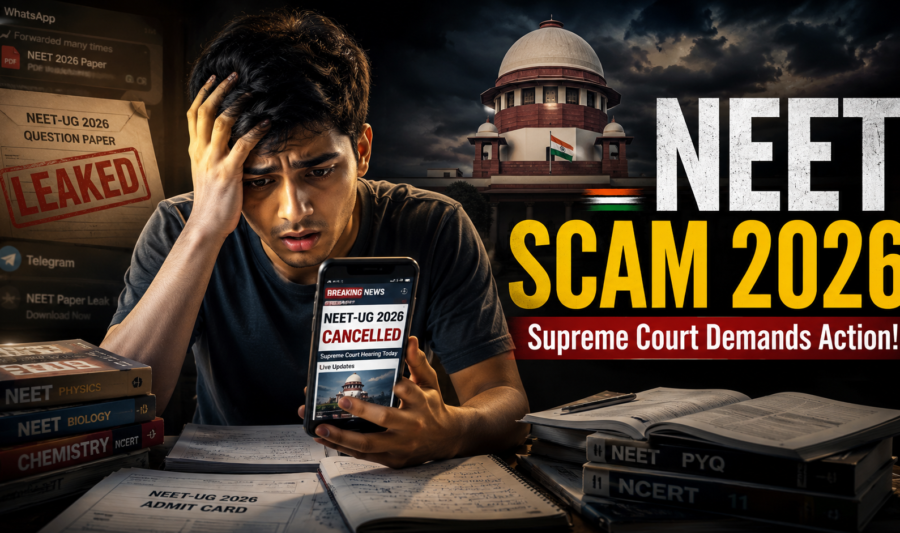
The cancellation of the NEET-UG 2026 examination after allegations of a large-scale paper leak has triggered nationwide outrage among students, parents, doctors, and education experts. With over 22 lakh aspirants affected, the controversy has once again raised serious questions about the transparency, security, and credibility of India’s medical entrance examination system.
Now, the Federation of All India Medical Association (FAIMA) has approached the Supreme Court of India seeking sweeping reforms and judicial oversight for the re-conduct of the exam.
What Happened in the NEET-UG 2026 Paper Leak Case?
The National Eligibility cum Entrance Test (NEET-UG) is India’s largest medical entrance examination conducted for admission to MBBS, BDS, and other medical courses.
However, NEET-UG 2026 came under controversy after reports surfaced that question papers were allegedly leaked and circulated through WhatsApp and Telegram groups before the examination began.
Following investigations and mounting pressure, the National Testing Agency cancelled the examination on May 12, 2026 — marking the first cancellation of NEET-UG since its introduction in 2016.
According to reports, nearly 22.7 lakh students had registered for the exam, while more than 22 lakh candidates appeared.
FAIMA Moves Supreme Court Seeking Major Reforms
The Federation of All India Medical Association (FAIMA) filed a petition in the Supreme Court demanding structural reforms in the examination system.
Key Demands Made in the Petition
1. Replace or Restructure NTA
FAIMA has demanded that the current exam-conducting authority be replaced or fundamentally restructured with a technologically advanced and autonomous body capable of conducting secure examinations.
Official Website:
National Testing Agency (NTA)
2. Conduct Re-Exam Under Judicial Supervision
The petition requested the appointment of a high-powered monitoring committee led by:
- A retired Supreme Court judge
- A cybersecurity expert
- A forensic scientist
The committee would supervise the reconduct of NEET-UG 2026 to ensure transparency and fairness.
3. Implement K. Radhakrishnan Committee Recommendations
FAIMA also urged authorities to strictly implement the recommendations of the K. Radhakrishnan Committee formed after the 2024 NEET controversy.
These reforms reportedly focus on:
- Better examination security
- Stronger monitoring systems
- Prevention of paper leaks
- Improved accountability
4. Shift to Computer-Based Testing (CBT)
One of the biggest recommendations is transitioning NEET-UG from physical paper mode to a Computer-Based Test (CBT) model.
According to the plea, transporting printed question papers creates serious security vulnerabilities and increases the risk of leaks.
A CBT-based examination system could:
- Reduce paper handling risks
- Improve encryption security
- Allow digital locking of question papers
- Minimize third-party interference
5. CBI Investigation Status Report
FAIMA has also requested the Court to direct the Central Bureau of Investigation to submit a detailed status report covering:
- Arrests made
- Syndicates identified
- Charges filed
- Progress of investigation
Official Website:
CBI India
Why Students Are Angry
The cancellation has deeply impacted lakhs of students who spent years preparing for one of India’s toughest competitive examinations.
Many aspirants are now facing:
- Mental stress
- Uncertainty regarding admission timelines
- Anxiety over re-examination
- Financial burden of additional preparation
Student organisations across states including Delhi and Kerala have already staged protests demanding accountability and strict action against those responsible.
Allegations Against the Existing System
The petition strongly criticized the current examination management system and called it a “systemic failure.”
According to FAIMA:
- Examination security mechanisms failed despite GPS tracking and biometric systems
- Question papers were allegedly circulated online before the exam
- Excessive outsourcing weakened secrecy and control
- NTA lacked proactive cybersecurity monitoring
The plea argued that the current system reacts only after leaks happen instead of preventing them beforehand.
What Happens Next?
The Supreme Court is expected to hear the matter soon. The outcome could determine:
- Whether NEET-UG 2026 will be reconducted
- If judicial monitoring will be introduced
- Whether India shifts towards a more secure CBT examination model
- Future reforms in national competitive examinations
The case is now being closely watched by students, educational institutions, and policymakers across the country.
Final Thoughts
The NEET-UG 2026 paper leak controversy has become more than just an examination issue — it has evolved into a national debate about accountability, transparency, and trust in India’s education system.
For millions of aspiring doctors, the demand is simple: a fair examination system where hard work matters more than leaks and corruption.
As the Supreme Court examines the matter, students across India now await answers, reforms, and justice.